Showing posts with label health. Show all posts

Saturday, 2 January 2010

Warming up for a great workout

Warming up is a vital component of every workout. In addition to getting us mentally and physically ready for exercise, it provides an opportunity to practice the movements we are going to perform in the coming session whilst hopefully minimising the risk of suffering injury while training.

So, how best to warm up? Assuming you are warming up for a general workout, it makes sense to perform a generalised warm up which gets all the muscles, joints and systems of the body working well to facilitate a good training session. The ingredients of a general warm are

1) The pulse raiser – cardiovascular exercise is used to raise the heart rate and is the part of the warm up that makes you warm! It’s important to make the pulse raiser graduated i.e. increase in intensity over time. By using exercises such as rowers, cross trainers or skipping, in addition to raising the pulse, it is possible to mobilise all the major joints of the body. You should finish your pulse raiser at an RPE or around 5/6 or, in other words, feeling ready to get on with some more strenuous exercise! 5 to 10 minutes spent on this component of warming up is plenty – we want to be warmed up and not worn out after all.

2) Joint mobility – chances are that if you selected the rower, cross trainer or skipping, you’ll have mobilised your major joints already and won’t need to spend any further time getting your joints ready for exercise. If, however, you warmed up using a bike or treadmill, you may well need to mobilise the joints you didn’t move during that exercise. To mobilise a joint, simply take it through its natural range of movement in a controlled fashion, increasing the degree of motion as you feel the joint warming up e.g. shallow knee bends progressing to full squats over 10-15 reps to mobilise the hips and knees or small arm circles progressing to full arm circles to mobilise the shoulders.

3) Flexibility – it’s not uncommon to see people performing static stretches as part of their warm up but, as useful as this type of stretching is, it’s far better to utilise a method of stretching called dynamic stretching in the warm up and leave the static stretches for the cool down. Static stretches tend to cause reduced blood flow through muscles, muscular relaxation, the pulse to slow and reduced body temperature – none of which sound like things we want in a warm up! In comparison, dynamic stretches keep the heart rate and body temperature elevated, “wake up” our muscles, mirror the movements likely to be performed in the workout and also promote joint mobility.


The Ultra Fit Warm Up
In the video, you’ll see a pulse raiser – in this case skipping, plus 4 dynamic stretches which will prepare the muscles and joints for the workout to come. Make sure when you perform your own warm ups you make your cardio progressive i.e. start slow and build up gradually and perform your stretches in a controlled and rhythmical manner – never being too ballistic. The whole warm up should take somewhere between 5-10 minutes in total, depending on how much cardio you do and how many repetitions of the dynamic stretches you perform...

Remember - before starting a new exercise routine, make sure you get the go-ahead from your Doc!

This article and video was first published on www.ultra-fitmagazine.co.uk

Wednesday, 9 December 2009

The Deck of Cards Workout


Ever been at a loss as to what training to do? Ever thought “I’d really like someone to tell me what workout to do today”? Well then – the Deck of Cards Workout is for YOU!

This workout has been around a while and has been written about by the likes of Matt Furey and Ross Emanait and I’m pretty sure neither of them lay claim to having invented it but it’s such a good effective training system it’s worth promoting again.

The Deck of Cards Workout is deceptively simple...using a normal deck of playing cards allocate an exercise to each suit for example Hearts = squats, Diamonds = press ups, Spades = lunges, Clubs = bent-leg sit ups. Then, starting with the well shuffled deck face down, turn over the top card and do the prescribed number of reps for that exercise so if you turn over the 8 of spades you would perform 8 lunges (either in total or per leg – that’s up to you.) Then, with minimal rest turn over the next card and do that exercise and so on until each card has been turned over.

Jokers can be removed or left in to provide extra exercises – the Joker could be something like run 500 meters or do 20 burpees...whatever you feel like putting in. The idea is to complete the deck as fast as possible so it’s an excellent cardio and muscular conditioning workout. Personally I like to make sure the Joker is a real challenge to add some extra intensity to the workout but whilst a challenge is good, making the Joker so tough that you fail to complete the workout would be erroneous so use some common sense!

Regarding the picture cards, there are a couple of options...Jacks = 11, Queens = 12, Kings = 13 or all picture cards = 12 (or higher). The beauty of the Deck of Cards Workout is you set the parameters based on your current fitness level and progress is very easy to logically progress the workouts over time. For example, as time progresses and you get fitter, the ace can increase from 1 rep to 3 reps and later to 5 reps and so on which adds volume to your workout. Ideally, when you have designed and completed a deck of cards workout it’s a good idea to repeat it on a regular basis so you can monitor your improvements as you (hopefully) complete it in less time than before.

The Deck of Cards Workout lends it’s self particularly well to body weight or minimal equipment exercises which keeps the transitions fast and the pace of the workout high but it can work equally well using traditional weight training exercises. Below I have outlined some of my favourite Deck of Cards Workouts to get you started...feel free to use them as they are or mix elements from the different workouts into your own unique training session. If you come up with a particularly good one, why not post it below for others to use?

1) Black cards = push ups
Red cards = bodyweight squats
Jokers = run 500 meters.

2) Hearts = Burpees
Diamonds = double unders (x 2)
Spades = high pulls
Clubs = sit ups
Jokers = 60 second planks.
(For this workout, when performing double unders complete 2 reps for every number of Diamonds i.e. 4 of Diamonds = 8 double unders)

3) Hearts = skipping (x 10)
Diamonds = body rows
Spades = kettlebell swings
Clubs = dipsJokers = row 500 meters.
(For this workout when skipping perform 10 turns of the rope for every number of Hearts i.e. 7 of Hearts = 70 turns of the rope etc.)

4) Hearts = step ups
Diamonds = sandbag clean and push press
Spades = chin ups
Clubs = crunchesJokers = 100 rope turns skipping

5) Hearts = barbell squats
Diamonds = barbell deadlifts
Spades = body rows
Clubs = bench press
Jokers = 60 seconds of twisting sit ups
(For this workout use around 60% of 1RM – it may be necessary to perform the reps rest/pause style i.e. if unable to perform all of the reps when a high card is revealed then do as many of the reps as possible, rest briefly and then continue with the set)

I strongly recommend writing in large letters the exercises you have allocated for each suit and sticking it somewhere visible for the duration of the workout. This will minimise any time wasted trying to remember what exercise you are supposed to be doing and avoid making mistakes.

As the cards come out in a random order, sometimes you’ll get a good run of dissimilar cards but from time to time you’ll think you must be playing poker and you’ll get runs of suits or lots of high cards in a row. Tough! That’s the beauty of this workout – you never quite know what you are going to get and that randomness is part of not just the fun but also the training effect. Runners call this kind of mixed training Fartlek which means speed play so just keep on keeping on – for every “bad” run there will be a good one.

There are endless variations for the deck of card workout and you are only limited by your imagination and as a change from the norm it’s a great but simple workout which really gets the job done!

Stop-the-press!
Feeling inspired after writing this piece so I did a Deck of Cards Workout for my own training today.

I warmed up by skipping for 5 minutes and doing a few dynamic stretches...

Ran 500 meters
Black cards = press ups
Red cards = bodyweight squats
(All picture cards done for 12 reps, other cards for face value)
Jokers = run 500 meters - my pack has 3 of ‘em for some reason!
Ran 500 meters to finish

182 reps completed for press ups and squats plus 2,500 meters running

Total time from start to finish including the additional 500 meter runs = 26 mins 7 secs of FUN!

Friday, 30 October 2009

The Success Quotient – stack the odds in your favour for reaching your fitness goals


Are you getting the results you deserve from your exercise time? Are your workouts effective, productive and enjoyable? Are you moving towards not just reaching your fitness goals but exceeding them? No? Well you aren’t alone. Many people put in their time in the gym and eat well but find themselves treading water rather than steaming ahead. Why? Exercise and eating well are only two parts of the equation - when it comes to getting into great shape, what you do during the rest of the 168 hours that make up the week is as important as what you do in the gym.

To improve your chances of success and reaching your fitness goals, answer the following 30 questions honestly, making note of any shortcomings or areas that need attention....
For each question use the following scoring system...

Always = 10
Mostly = 8
Frequently = 5
Rarely = 3
Never = 0
Look at each 10 question section individually to see how you are faring exercise, nutrition and recovery wise and then add up the score for all 3 sections, divide by 3, to give you your combined score...

Section 1 – Training
If you are taking the time to exercise, it makes sense to do it right. If you score badly in this section, make some changes so that unproductive workouts become a thing of the past!

1. Free weight/bodyweight exercises make up most of my training volume
2. Compound exercises make up 80%+ of my training volume
3. I use proper exercise techniques in all my training (minimal cheating)
4. My training programme reflects my goals and weakness
5. I change my programme at least every 6 weeks but stick with it long enough to give it chance to work
6. My programme is balanced to ensure all major muscles are exercised and I perform not just the exercises I’m good at but also the ones I’m not good at!
7. I refrain from performing low quality workouts e.g. junk miles, too much easy cardio etc.
8. My training is consistent and I seldom miss workout except when absolutely necessary
9. I perform adequate appropriate CV and flexibility work for my goals and my health
Section 2 – Nutrition
Without good nutrition not only your fitness but your health may suffer. Even if your training is perfect, without adequate nutrition your body is unlikely to benefit from exercise. Like putting the right fuel in a high-performance car, eating a well balanced diet will ensure the machine runs smoothly and optimally.

1. I only eat junk food one or fewer times per week
2. I consume adequate quality protein according to my requirements
3. I consume adequate carbohydrates according to my requirements
4. I avoid low quality/highly refined foods as much as possible
5. I try to minimise my consumption of processed foods, sugar and trans fats
6. I consume fruit and/or vegetables with every meal
7. I eat 4-6 quality meals a day (not just snacks)
8. I consume a post workout meal within 15 minutes of my training session
9. I keep my alcohol intake within healthy levels
10. I drink 2 or more litres of plain water a day plus 250ml per 15 minutes of exercise
Section 3 – Recovery
To benefit from exercise, the body must be allowed to recover. For recovery to occur we need to be in a neutral state called homeostasis which means all the systems of the body are in balance. If our body is out of balance e.g. because of too much stress or too little sleep, its recovery ability will be impaired and, as a result, progress is likely to be slow or possibly non-existent. Work with your body – not against it!

1. I try to keep my stress levels to a minimum
2. I sleep 8-10 hours a night
3. I go to bed no later than 11pm
4. I get a sports massage at least once a month
5. I am on time with work tasks and/or studies
6. I take time to relax during the week - not just at weekends
7. If I drink alcohol, I do so in moderation
8. If I am feeling over tired, injured or unwell, I will refrain from training until I feel better
9. When my stress levels are high, I reduce my training intensity/volume
10. I perform a light CV cool down post training
Add the scores for each section together and divide by 3 to give you your Success Quotient percentage...


90-100% - Excellent!
You are virtually bound to make good progress and, with continued determination and patience, should have little trouble reaching your health and fitness goals.

70-89% - Adequate
Some of your practices are maybe holding you back and whilst you may well reach your fitness goals, it’s likely that it’ll take you a lot less time if you address the highlighted shortfalls
40-69% - Poor
Your progress and ultimate success is being hampered by poor nutrition, training and recovery habits. It’s very unlikely you’ll make significant progress towards your fitness goals unless you make some radical changes to your lifestyle
0-39% - Danger!
Not only will you fail to make any significant progress, your performance is very likely to decline with possible negative effects on your health and well being. It’s time to make some radical changes for the better before it’s too late!
So, now you know what you need to do to increase your chances of success. If you need to make changes, avoid trying to make too many at the same time. Introduce a couple of changes at a time to avoid becoming overwhelmed. Lifestyle changes can take a while to “stick” so make it as easy as possible by making simple changes initially and working up to bigger changes once you have built up some momentum. Finally, make sure the changes you make fit as easlily as possible into your current lifestyle as if they don’t, it’s highly likely that you’ll soon revert back to your original behaviours.

Sunday, 25 October 2009

Try something new today!

While cleaning up some folders on my computer I came across this old article that hasn't seen the light of day since I wrote it 2+ years ago so I thought I'd give it an airing - hope you like it!

As I write this, I’m mid way through a 4 week long visit to the UK to see my family and friends…it’s a bit of a working holiday really; I’m writing lots of (hopefully!) good articles, planning my lessons for the rest of the year and catching up with people I’ve not seen much of over the last 12 months. Even though I’m on vacation and away from my usual training facilities, I was determined to continue with as close to my normal exercise routine as possible. Right from the get-go this proved to be a bit of a problem! I didn’t have the same amount of time as I normally do, my usual choice of equipment wasn’t available, there was no local gym for me to use, my day was less structured, and even the weather was against me more often than not! It was all a bit frustrating…I began to resign my self to doing very little activity over the coming weeks.

However, rather than let all this stuff get in the way of my pursuit of the healthy lifestyle, I decided to use this as an opportunity to try some different activities and not be ruled by my normal schedule. Instead of throwing my hands up in defeat and becoming a coach potato for a month, I looked for new and interesting physical activities that I wouldn’t normally do. I basically decided to “play” instead of train and I have to say it was very refreshing both mentally and physically. So, I hit the internet and local newspapers to see what activities and facilities were available to me during my visit. I’ve found plenty to keep me amused…

So far, I have had a few 1-to-1 kick boxing lessons, been to numerous group exercise classes, visited a near by indoor climbing wall, been to an adult gymnastics class a couple of times, ran around a near by park, completed lots of bodyweight exercise circuits, and, because I am without a car during my visit, I have walked to my nearest wi-fi hot spot most days – walking being one of the most readily available and healthy activities you can do.

So, what’s the point of this article? Many of the exercisers I know are very precious about their exercise routines. Runners run, cyclists ride bikes, weightlifters lift, bodybuilders build, and swimmers swim and so on. However, when they don’t have access to their normal training environment, they tend not to exercise at all. I see this as a huge missed opportunity to experience other ways of exercising, learn a new skill set and having some fun in a different but still healthy environment. The old saying “a change is as good as a rest” couldn’t be truer for the average regular exerciser.

Okay, so doing something different may take you out of your comfort zone, it might mean you try something you find you don’t like, maybe means you’ll be doing something that you’re not that good at or doesn’t directly aid your current goals but think of the benefits. At the end of the day, we were designed to be active and activity comes in many forms, most of which will have at least a minor benefit to our bodies and our health. AND you never know you just might find a new activity which fires your passion and gives your regular exercise routine a much needed shot in the arm. When I was in the armed forces, I was often told “routine is the enemy” and it’s only over the last couple of weeks I have finally understood the wisdom in those words. For well rounded heath and fitness remember “variety is the spice of life”.

“Trying something new” is also great advice for anyone new to exercise. Don’t restrict your choice of activities to the normal gym, cycling, jogging, classes or swimming. As good as those activities are, if they don’t inspire you, then look for something else that will. What sports have you done in the past? Watched on TV and though “that looks fun”? With a bit of net-surfing on your part, I’m sure you’ll find a club, group or society of people who share this interest and will provide you with the support you need to have a go at something new. There are groups out there for all ages and all levels of experience whose soul reason for existence is the promotion and development of their chosen pass-time and beginners will be welcomed with open arms. An additional benefit of joining a group is the social support and opportunity to meet people and make new friends which can contribute to your overall enjoyment.

Remember – exercise shouldn’t be a chore! It should be life enhancing, enjoyable and something to look forward to. If you find your self dreading your next workout, training session or team practice, maybe you should be looking for a new challenge – one which excites, energises, stimulates and entertains you. After all, as I’ve said before, “it needn’t be hell to be healthy!”

Friday, 2 October 2009

Cardio confusion – your guide to aerobic exercise


Cardio. CV. Aerobics. Energy system work. So many names for the same thing! And with so many cardio options available, it’s tough to decide which method is best. Much of what is written about cardio exercise is biased towards one approach or another and is often based on the authors’ preference and back ground. In this article I’d like to provide you with an independent view of cardiovascular training so that you can make an educated choice as to which method is best suited to your goals.

What is cardiovascular exercise? For exercise to be truly considered cardio, it should consist of steady-state activity which uses large muscle groups in a rhythmical manner and elevates your heart rate to somewhere between 60-90% of your maximum heart rate. Generally, activities such as jogging, running, power walking, cycling, swimming, group exercise classes, rowing, and using a skipping rope are the mainstay of aerobic activities but ultimately, any activity which significantly elevates the heart rate for an extended period of time can be considered aerobic training. To be honest, the modality used makes very little difference and you should choose the one you like most/dislike least!

How hard?
Cardio training is normally performed for an extended period of time so it’s important to choose an exercise intensity that is hard enough to be beneficial but not so hard that it becomes necessary to stop. It is generally accepted that the benefits of aerobic exercise are gained from working at between 60-90% of an individual’s maximum heart rate (MHR) and many people rely on monitoring their heart rates as an indicator of exercise intensity.

You can calculate your Heart Rate Training Zone (HRZ) by performing the following calculations...

Simple Karvonen Theory
220 – your age in years x 60%220 – your age in years x 90%
e.g. HRZ for a 40 year old220 – 40 = 180 x 60% = 108 bpm220 – 40 = 180 x 90% = 162 bpm

Heart Rate Reserve (takes into account elevated fitness levels associated with a lower resting heart rate)
220 – age in years – resting heart rate x 60% + resting heart rate220 – age in years – resting heart rate x 90% + resting heart rate
e.g. HRZ for a 40 year old with a resting heart rate of 60 bpm220 – 40 = 180 – 60 = 120 x 60% = 72 + 60 = 132 bpm220 – 40 = 180 – 60 = 120 x 90% = 108 + 60 = 168 bpm

These numbers represent the lower and upper range of your HRZ. Going below 60% will essentially negate many of the benefits of exercise as it will be too easy where as going above 90% will take you into the anaerobic zone where lactic acid will start to rise and you’ll be forced to slow down and stop...and it hurts too! We’ll look and anaerobic training later though as it’s a very useful exercise tool.
To keep an eye on your heart rate while exercise you have a number of options available...you can use a heart rate monitor, you can take your pulse manually at either your wrist (radial pulse) of at your neck (carotid pulse) or, if using gym-based cardio equipment, many machines have built in hand sensors which measure your heart rate although some are more accurate than others.

However, the calculations above are not infallible – some people don’t fit into either of these systems and may find that their HRZ makes exercise either too easy or too hard. Luckily there are a couple of other methods we can use to monitor exercise intensity...

The Rate of Perceived Exertion Scale
The Rate of Perceived Exertion Scale (RPE for short) was designed in the 1960s by Gunnar Borg – a Scandinavian exercise expert. He devised a scale with which to prescribe aerobic exercise to his athletes based on how they felt while training. The original RPE scale went from 6 (absolute rest/inactivity) to 20 (maximum exercise intensity). Why a scale of 6 – 20? Borg’s athletes had an average resting heart rate of 60 bpm and an average maximum heart rate of 200 bpm so he just knocked of a zero. It was found that, with some practice, it was possible to estimate how hard an athlete was working based on how they felt and this corresponded quite accurately to their corresponding heart rates. For many people, the classic 6 – 20 scale is a little awkward to use so it has been simplified and adapted to suit the general exerciser...

1. Inactive/at rest
2. –
3. Very light
4. –
5. Moderate
6. –
7. Heavy
8. –
9. Very heavy
10. Maximum
As a general rule of thumb, steady state cardio should be performed at an RPE of 4 – 7 for maximum benefit. Exercise below this level won’t cause much in the way of fitness or health benefits and above will mean approaching the anaerobic zone.
The Talk Test
Our final method for assessing exercise intensity is the talk test. Quite simply, while exercising in your aerobic HRZ you should be able to hold a conversation with regular pauses for breath every couple of sentences. If you can only manage single word responses then it’s likely you are working too hard and if you can manage whole paragraphs without pausing for breath then you’re probably not working hard enough. Combine RPE with the talk test and you should have no problem making sure you are working at the correct intensity to get the maximum benefits from your exercise.

How long? How often?
The American College of Sports Medicine (ACSM) recommends 3 bouts of cardio exercise per week for a minimum of 20 minutes per session at between 60-90% of MHR to a) improve fitness and b) reduce mortality. Doing more is not necessary for health purposes but if performance enhancement (elevated fitness levels) is your goal then increased frequency and duration are likely to be necessary. Even rust-stained iron pumpers should make sure they get their 20 minutes 3 times a week for protect themselves from the likes of CHD and other diseases of the cardiorespiratory system.

Different approaches to aerobic training
So now you know how to monitor your exercise intensity and how long/how often to exercise, let’s look at the different ways you can choose to perform your aerobic activity...
LSD – and no, not the drug!
LSD stands for Long Slow Distance training and it the method that most exercisers “fall into” when they embark on a cardio training programme. LSD training is exactly as it sounds – performed at a relatively slow pace for extended periods of time. LSD training builds base level aerobic fitness and conditions the body for extended workouts. LSD is performed at around 60% of MHR or around RPE level 5 and may be performed for as long as an hour or more. LSD training has the advantage of not being overly exhausting but on the down side requires a greater time commitment compared to some other methods we’ll discuss later.
LSD is a vital component of training for marathon running and long distance cycling but while a necessary part of endurance athletes training, many fitness enthusiasts use LSD for weight management in the hope that it will result in substantial amounts of fat loss.

While exercising at LSD pace fat provides the primary source of energy however, fat is so energy dense – 9 kcal per gram – that even extended workouts result in only relatively small amounts being oxidised (burnt). Regardless of pace, running a single mile uses around 100 kcal and 1 pound of excess body fat contains about 3,500 kcal so to lose a pound through slow paced aerobic exercise alone it would be necessary to run 35 miles! Chances are that’s more than most people run in 2 weeks! LSD training (and remember LSD can be applied to cycling, rowing, stepping as well as running) is great for developing base level aerobic fitness but when it comes to fat burning/weight management, there are other methods which will be more successful and efficient.

Fartlek – funny word but serious training method!
Fartlek means speed play in Swedish and that describes perfectly our next method of cardio training. The basic premise is to run (or cycle, row etc) at a variety of paces which are selected at random. The exerciser may walk, jog, run or sprint for a variety of distances and durations over the course of a workout until the exercise time period has elapsed or a predetermined distance has been covered. Physical landmarks such as lampposts, street signs or trees is a great way to organise a Fartlek workout e.g. after jogging for 5 minutes to warm up alternate between running hard for 3 lampposts and slow jogging for 1 or jog 1, run 1 sprint 1 and repeat.

Alternatively, work periods can be controlled by counting the number of strides or time elapsed or a combination of the above. The variations are endless and can be just as easily applied to cycling as they can to running or any other cardio exercise modality. The intensity of a Fartlek workout can be easily altered to suit an individual’s fitness levels by moderating the amount of high intensity exercise compared to lower intensity work – in other words the less fit the exerciser, the slower jogging and brisk walking will be performed.

Fartlek, done for a shorter duration than LSD but at a higher overall average pace, is a good fat burner because of the periods of higher intensity training which triggers a phenomenon called EPOC (Excessive Post Exercise Oxygen Consumption) which will be discussed later.
FCR – time to hit a higher tempo!
FCR stands for Fast Continuous Running but, as with all of our cardio training methods, this approach lends itself well to just about any exercise modality. FCR is just like it sounds, working hard at a high constant pace. On our RPE scale, FCR would score around 7 or 8 or about 85-90% of MHR and is the highest sustainable level of aerobic activity – think red lining your car just below the point where the engine will blow! Some refer to this as tempo training and others anaerobic acid threshold training but regardless of what it’s called; FCR is a tough but generally shorter workout. The idea is simple – run (or cycle or row etc.) as fast as possible avoiding going so fast that you are forced to slow down because of fatigue. Lactic acid (one of the by products of anaerobic energy production) is literally bubbling under the surface and going any faster will result in having to slow down or stop. FCR is (or should be) a constant battle to maintain pace – even though the body is probably saying “slow down!”

Because of the large accumulation of lactic acid in the blood, FCR is a supreme fat burner because of EPOC. When lactic acid accumulates in the blood, the aerobic system has to work overtime to clear it out once exercise comes to an end. This “after burn” is responsible for an elevated metabolic rate (energy expenditure) at rest. The body is literally in overdrive working to clear unwanted lactic acid from the system and, as a result, burns a whole load of energy not just during the workout but also in the hours (yes HOURS) afterwards. The metabolism may be elevated for up to 48 hours after a hard lactic acid inducing workout which results in substantial energy costs and potential fat loss. Pretty good for a shorter workout!

LSD (long slow distance) training causes minimal EPOC and, as a result, is not so efficient for fat loss. FCR is an excellent training method for improving higher end aerobic fitness, teaching the body lactic acid tolerance and in training athletes involved in shorter, more intense sports like boxing, middle distance running, rowing or martial arts. It goes without saying that because of the advanced nature and demands of this type of exercise; FCR is something to work up to and should only be attempted after establishing a base level of aerobic fitness via LSD and Fartlek training.

Interval training – the clock is your coach!
Interval training can be defined as “periods of higher intensity work interspaced with periods of rest” and is a very useful and flexible training approach which, with modifications, is suitable for everyone from the beginner exerciser to an Olympic champ. By manipulating the training variables i.e. speed, distance covered, length of recovery etc it’s possible to design interval training programmes for just about anyone...


1) E.g. Beginner client – low level of fitnessPower walk up hill 3 minutesSlow walk on flat 2 minutesRepeat 4 times

2) E.g. Intermediate client – good base fitnessRow 1000 meters as fast as possibleVery slow row for 2 minutes Repeat 6 times

3) E.g. Advanced client – very high level of fitnessSprint 400 metersJog 100 metersRepeat 10 times

Work vs. Rest periods
Aerobic intervals
With aerobic intervals (up to 90% MHR) generally workouts are on a 1 to 1 work to rest ratio or possible 1 to .5 e.g. Run 3 minutes, resting 90 seconds to 3 minutes between efforts.

Anaerobic Intervals
Workouts that exceed 95% of MHR will often require a longer rest period between efforts so 1 to 2 or 1 to 3 work to rest intervals are the norm e.g. sprint for 30 seconds, rest for 60 – 90 seconds.

Please note these are only guidelines and work/rest intervals can be manipulated freely to suit the abilities of the individual exerciser.
Regardless of the standard of the client, the interval principle is the same – alternate periods of higher intensity exercise with periods of recovery. Interval training allows significant overload of the cardiorespiratory system which will result in good increases in the both anaerobic and aerobic fitness while also being, according to some experts, the ultimate fat burning workout because of very high degrees of EPOC. Certainly, a hard interval session can result in very high heart rates and elevated body temperature for many hours after exercise has concluded which is a good indicator that the metabolism is very “revved up” even at rest.

As high-end interval training can be so demanding, it is very important to progress into it gradually. It’s certainly not a good idea to attempt workout number 3 if you have little or no running experience. Make haste slowly and start your interval training regime with the intention of gradually increasing your workload over the coming weeks – your body will thank you for it! Putting it all togetherSo now you know about the various cardio training methods let’s briefly look at how you can incorporate them into your weekly schedule...

If your chosen sporting activity is very start/stop like basket ball or rugby, the majority of your cardio training time would be best spent performing a variety of interval training whereas if your sport involves fast but continuous effort e.g. 5km running or similar, FCR should be the dominant feature of your workouts. If you are more involved in activities that take place over longer durations e.g. long distance running or cycling then LSD will be a necessary tool for you to utilise on a regular basis. If however you just want to add some variety to your current cardio routine I suggest the following template as a good staring place.

Day 1 FCR
Day 2 LSD – recovery/easy pace
Day 3 Rest
Day 4 Intervals
Day 5 Rest
Day 6 Fartlek
Day 7 Rest
If you choose to design your own weekly template it’s important to remember the following...
Avoid having too many intense workouts in a row without any rest/recovery time as you may feel burnt out
  1. Monday follows Sunday! Don’t begin AND end the week with hard or identical workouts.
  2. It always look easy on paper – don’t be afraid to change your plan if you underestimated its intensity
  3. Make haste slowly – only increase your workout durations by around 10% a week. Greater increases than this may lead to injuries and you can’t train if your are injured.
  4. Cross training is a great way of making sure you don’t over stress any one particular part of your body. By mixing your exercise modalities e.g. running, cycling, rowing, swimming etc, you can avoid overloading and possibly injuring your limbs
  5. Choose the exercise modalities you enjoy – running is not compulsory! You can swim, cycle, step, skip, row, walk or whatever suits you best. If it hurts it’s probably not doing you any good
  6. Remember that cardio is not the golden goose of exercise – it’s important to make sure that you also perform your strength training, flexibility work and core work otherwise you may find yourself very fit but as weak as a kitten with the posture of Quasimodo and as flexible as concrete!
So now you know about cardio exercise. Introducing some of the methods described in this article will hopefully get you out of your cardio rut and push you on to new, higher levels of aerobic fitness. Oh, and by the way, if you are one of those people I see in the gym every morning walking sedately on the treadmill while reading a newspaper...you’re wasting your time!!!

Thursday, 17 September 2009

The Benefits of Exercise


We are often told that exercise is good for us however the phrase “good for us” is a bit vague and considering the effort, motivation and dedication often required to become a regular exerciser, surely being told it’s “good for us” needs to be expanded on.

In this article, I want to list the benefits of exercise and hopefully, in turn, help raise your motivation levels and make it easier to stay on the straight and narrow road to better health and fitness!

There are many benefits associated with regular exercise and they can be broadly divided into two categories – physical and psychological. Some of these benefits may be a bit of both so I’ve listed them according to my interpretation…

Let’s get physical!
The human body consists of molecules, chemicals, minerals, cells, tissue, organs, bodily systems, muscles, bones, blood and numerous other components – all of which benefit from regular appropriate exercise. Some of the physical benefits of exercise include:

Improved cardiovascular health (cardiovascular referring to the heart and lungs)
Improved cardiovascular fitness
Improved circulation to extremities (no more cold feet!)
Reduced likelihood of developing varicose veins
Reduced blood pressure
Reduced likelihood of suffering heart attacks and strokes
Lowered resting heart rate
Improved blood lipid profiles
Increased energy expenditure leading to lowered body fat levels
Reduced stress levels/stress management
Lowered risk of developing diabetes and lowered resting blood glucose levels
Lowered incidence of all cause mortality
Improved muscle tone
Increased muscular strength, power and endurance
Greater muscular flexibility
Increased range of movement at major joints
Increased bone density & decreased risk of Osteoporosis
Stronger ligaments and tendons
Improved co-ordination, balance and proprioception
Increase immune system efficiency
Improved posture
Lowered incidence of non-specific back pain
Increased resistance to fatigue
More energy for day to day activities

Are you mental?
Many people are very surprised to learn that exercise has a very positive effect on our psychological state also. A healthy body and a healthy mind often go hand in hand…

Elevated mood state due to release of exercise induced endorphins
Increase mental focus
Provides a tremendous feeling of satisfaction and achievement
Lowered stress levels
Reduced likelihood of developing depression
Increased self confidence
More positive outlook on life – a “can do” attitude
A healthier attitude towards food
Greater self awareness


That’s not all folks!
And if those reasons weren’t enough, here are a few more often forgotten benefits of being fit, healthy and a regular exerciser:

Exercise provides us with a great opportunity to increase our social circle
Makes us more attractive to the opposite sex
Can help develop both self sufficiency and team work
Gives us more latitude with what we choose to eat
Teaches us to be goal orientated
Improved time management, organization and planning ability
Improved quality and enjoyment of life!

Never too late...
Generally, people are living considerably longer than they used to. This gives the impression that society is now healthier than ever before. Sadly this is not the case. Chronic degenerative diseases plague modern man, as does obesity and other conditions associated with poor nutrition as inactivity. Modern medicine is now so advanced that we can keep people alive longer and control symptoms with medication. However, this long life is often accompanied by poor quality of life, disability and unpleasant side effects from medication. People are living considerably longer than their predecessors but their quality and enjoyment of life is much lower than it could be. Personally, I can’t imagine a worse fate than living a long time but losing quality of life. It’s never too late to begin experiencing the benefits of exercise – the body is a remarkable machine which adapts readily to change and has this capacity long into our twilight years. Improved fitness, strength and health are there fir the taking!

How to use this information?
The next time you find your self tempted to skip a workout, eat junk food or are not sure if you should even begin trying to be more physically active, try this exercise…

Divide a piece of paper into two with a vertical line. This is your “Benefit versus Cost” list. On the left hand side, write the heading “Benefits” and on the right hand side write the heading “Costs”. List as many benefits as you can think of including the ones listed above and any others you can think of. On the other side, make a note of any costs you feel are associated with maintaining a healthy lifestyle. By cost, I don’t just list financial implications, but the cost in terms of time, sacrifices and changed behaviours.

In this exercise, in the majority of cases the benefits will always greatly out weight the costs. Sure, you may have to cut back on pizza night form three times a week to once a month, you might find you need to get up forty five minutes earlier, you might miss having beers with your friends after work but compared to what you’ll be getting in return, the sacrifices you’ll make are really very small indeed!

So, the next time someone says “why do you bother with all that exercise stuff”, reach into your pocket, get your “Benefit versus cost” list out and then reel of all the great things you are getting back in return for your investment.

The ancient Greeks were a clever bunch and had a great many sayings and expressions that are as true today as they were when they were first uttered by Socrates, Hippocrates and the other fathers of modern knowledge.

One of my favourites is this “Make time for exercises, or make time to be ill”.

Right, I’m off for a workout!!!

Wednesday, 9 September 2009

The Budget Busting Workout


Short of time? Short of money? Who isn't!? When it comes to the crunch, often the first thing to suffer when times are hard is often exercise. Gym fees become a luxury and there are never enough hours in the day to fit everything in...However, exercise needn't be a financial or time burden - it's all about making do with what's readily available which reduces both time and cost. The following workout is my do-it-all budget-busting workout for the chronologically and fiscally challenged!

This workout is an interval based workout which alternates 2 minute periods of aerobic activity e.g. skipping, jogging or step ups with 1 minute of a body weight exercise for 6-12 rounds.


Equipment required

  1. A body (preferably your own!)
  2. A clock with a visible second hand or programmable timing device
  3. Skipping rope (optional)
  4. Somewhere to do pull ups (optional)
  5. A rubber exercise band (optional)
  6. An exercise mat (optional)


2 minutes easy CV to warm up (skip, jog, step ups etc)
1 minute of squat, reach & twist (dynamic stretch)
2 minutes of CV (1 minute easy, 1 minute harder)
1 minute of an upper body pushing exercise of your choice e.g. press ups
2 minutes CV (1 minute moderate, 1 minute fast paced)
1 minute of an upper body pulling exercise e.g. chin ups, pull ups or body rows
2 minutes CV (1 minute moderate, 1 minute fast paced)
1 minute leg exercise e.g. lunges or squats
2 minutes CV (1 minute moderate, 1 minute fast paced)
1 minute of a core exercise of your choice e.g. planks
2 minutes CV (1 minute moderate, 1 minute fast paced)
1 minute of an upper body pushing exercise of your choice e.g. press ups
2 minutes CV (1 minute moderate, 1 minute fast paced)
1 minute of an upper body pulling exercise e.g. chin ups, pull ups or body rows
2 minutes CV (1 minute moderate, 1 minute fast paced)
1 minute leg exercise e.g. lunges or squats
2 minutes CV Cool down (1 minute moderate, 1 minute slow paced)
1 minute of a core exercise of your choice e.g. planks
3 minute static stretching - 20 seconds double calf stretch, 20 seconds L & R hamstring, 20 seconds L & R quads, 20 seated adductor (inner thigh) stretch, 20 seconds L & R warrior stretch, 20 second double pec (chest) stretch

Total workout time = 30 minutes including warm up, cardio, full body muscular endurance, core work and cool down. Perform the Budget Busting Workout on alternate days and, to avoid boredom, try to rotate the body weight exercises used - i.e. if you do lunges on Monday, do squats on Wednesdays and reverse lunges on Friday etc.

Now I'm not saying that this workout is perfect and will result in amazing gains in fitness or conditioning or any other such nonsense but it will deliver a good all round level of fitness and burn plenty of calories while costing minimal time and money and it's definitely better than the alternative...which is doing nothing!

Thursday, 3 September 2009

Six of the best for a perfect midsection


A flat, toned mid section – for many the epitome of health and fitness. No other muscle group has the sex appeal and aesthetic allure of a well conditioned “six pack”. Like most things worth having, developing a great set of abs is not easy, but it is possible to achieve success if we apply our selves and exercise not just our bodies but our minds also. It’s not just about training hard – but training smart. In this article, we will reveal the secrets for developing a mid section to be proud off…and save you a lot of wasted time!

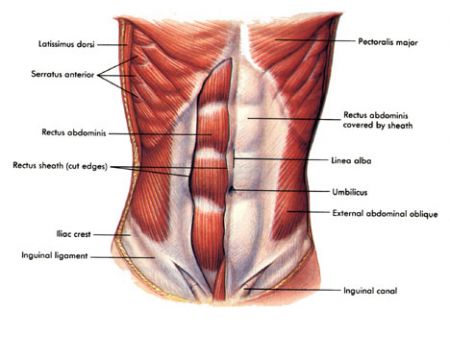
Many people in the pursuit of abdominal perfection spend too much time focusing on the rectus abdominus (located on the front of the torso, running from sternum to pubis) and completely neglect the other components of the mid section. This is like trying to develop the biceps but not the triceps but still expecting to build a big, strong, functional arm. No matter how hard we try, this approach will limit our success and minimize the benefits we experience. Other common mistakes in abdominal training include the use of ultra high reps in the hope of “spot reducing”, using insufficient loading for fear of making the abdominal muscles “thick”, using ab cradles to “safely” work the mid section, ignoring the functions of the mid section, not using enough variety in ab exercise selection and training the abdominals too often.

The core, as the mid section is commonly known, is actually made up of a number of muscles, all of which deserve our attention if we are to develop a well balanced, functional and attractive set of abdominal muscles. Whilst it’s not necessary to know the names of all these muscles to be able to exercise them effectively, it’s worth casting an eye over the core’s components so you can dazzle your friends with your new found anatomy and physiology knowledge!


1) Rectus Abdominus - Front of torso
Flexion of spine, lateral flexion of the spine e.g. crunches, side bends

2) Erector Spinae - Back of spine
Extension of spine, lateral flexion of the spine e.g. back extensions, side bends

3) Internal Obliques - Side of torso
Rotation of spine, lateral flexion of the spine e.g. twisting crunches, cable wood chops

4) External Obliques - Side of torso
Rotation of spine, lateral flexion of the spine e.g. twisting crunches, Russian twists

5) Transverse Abdominus - Around internal organs
Compression of abdomen, drawing in of navel e.g. planks

Because of the different functions of the core musculature, it is necessary to train the midsection with a multitude of exercise to ensure balanced development which will ensure both good aesthetics and function. In other words as well as looking good (aesthetics) they will work well (function). Many abdominal routines are “all show, but no go” where as we ideally want to develop both show and go simultaneously!

The functions of the core can be divided into six specific movement patterns (hence the title of this article!) which need to be included when designing a core conditioning routine. Now, don’t worry if the list of movements seems dauntingly long or complicated, later in the article I will show you how to integrate these exercises into your current routine…

1) Flexion of spine – lifting shoulders
Crunches, sit ups

2) Flexion of spine – lifting hips
Reverse crunches, hanging leg raises, dead bugs

3) Extension of spine
Dorsal raises, back extension machine, deadlifts

4) Rotation of spine
Russian twists, cable wood chops

5) Lateral (side) flexion of spine
Side bends, side planks

6) Bracing/compression of abdominals
Planks, kneeling on a Swiss ball

As with all fitness training, whether it is bodybuilding, cardiovascular endurance, strength or flexibility orientated, there is no single “golden” routine which guarantees never ending results. To stimulate the improvements we seek from our bodies, we need to constantly challenge ourselves to work to higher levels of performance and intensity. The human body adapts very quickly to any stress that it is exposed to and, as a result, needs to be exposed to progressive overload in order to be stimulated to change positively. This means that, as our core conditioning improves, we must endeavor to increase the intensity of the exercises we choose to perform.

When considering the merits of a particular core exercise, it is vitally important to determine if we can make the movement more demanding as we improve the condition of the target musculature. If the answer is a resounding “no” then there are better exercises for us to choose! A good example of a poor core exercise is the old gym favorite the ab cradle.
With a little bit of practice, it is possible to perform literally hundreds of reps using this device which uses a lot of our valuable training but delivers very little in the way of progressive overload and therefore improvements in core conditioning. The ab cradle is an acceptable exercise for a complete beginner, but after a few short weeks, our newbie will have out grown this exercise and will need to do something more challenging to develop their fitness level further.

There are a number of changes we can utilize when progressing an exercise and by manipulating these “training variables” we can ensure we keep improving the condition of our target…

1) Increase external load (e.g. use a medicine ball, cable or dumbbell) to increase strength demand

2) Reduce rest time between sets e.g. from 60 seconds to 45 seconds to challenge recovery mechanisms

3) Increase volume of exercise (more sets or more reps) to increase muscular endurance demand

4)Increase complexity/technical difficulty of exercise e.g. progressing from a floor exercise to a standing exercise. Ground reactive core exercises tend to be more challenging and effective than those performed laying on the floor

5) Move more slowly (reduce tempo) to increase time under tension (TUT)

6) Increase the speed to develop greater muscular force/power

7) Progress from a stable to an unstable training surface (e.g. use a Swiss ball or Bosu) to challenge nervous system

8) Group exercises into “super sets” or circuits e.g. alternate between Swiss ball crunches and back extensions

9) Introduce static holds at point of peak contraction to extend duration of the set

10) Perform multiple exercises per function of the core musculature e.g. side plank followed by side bends

As a general rule of thumb, if it is possible to perform more then 20 reps of any given exercise in perfect form, it is time to use one of the training variables to bring the rep count down. Don’t waste time doing hundreds of reps of any core exercise … treat your abs like any other muscle group and keep the rep count in between 6 to 20 for maximum results in minimal time!

There are a number of options we can use for introducing our new “smart core” work into our weekly training programme. As we mentioned earlier, there is no “golden routine” which guarantees results. It’s a matter of deciding which option works best for you.

Option 1
Perform all core movements in a single session 2-3 times per week, completing 1-2 sets of 6-20 reps, one exercise per movement pattern.

Option 2
Divide the six movements into two groups of three, and perform one list on one day of your training week e.g. Monday, and the other list later the same week e.g. Thursday. Complete 1-2 exercises per movement pattern, 2-3 sets per exercise of 6-20 reps

Option 3
Divide the six movements into three groups of two and perform one pair on Monday, one pair on Wednesday and one pair on Friday. Perform 1-3 exercises per movement pattern, 2-4 sets per exercise of 6-20 reps

Option 4
Perform one movement per day, six days a week. Perform 2-4 exercises per movement pattern, 3-5 sets per exercise, 6-20 reps per set.

So, there we go – you now have all the information you need to create your own “six of the best” core conditioning programme which will speed you on your way to developing that fitness Holy of Holies … the six pack. Good luck and train both hard and smart.

Wednesday, 26 August 2009

Fitness Tip or Fitness Myth – Sweating and Weight Loss


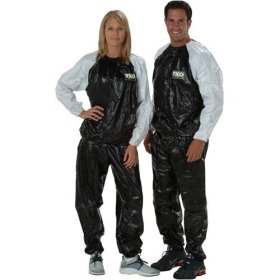
Back in the late 80’s and early 90’s it wasn’t uncommon to see people out exercising wearing suits made of PVC. These suits, normally with elasticated cuffs, ankles and neck, were designed to promote weight loss by increasing the amount of sweat produced by the wearer and were made very popular by those funky kids from the New York School for the Performing Arts in Fame but then so were leg warmers! Anyway…


The ‘’Sauna Suit’’ as it was known has almost all but disappeared but recently I spotted a “sauna vest” being promoted at a big UK leisure show so it looks like the misconception that sweating excessively causes fat loss is still alive and well. The theory that sweating causes increased fat loss has been around for a VERY long time – the history of saunas having contributed much to this mistaken opinion. It is an irrefutable fact that excessive sweating does indeed cause WEIGHT loss, but sadly, this weight is NOT fat!


Many sports use sweating as a way to “make weight” and get athletes into their required weight category. For example, a fighter who weighs 82kg could sweat off 2.5kg of weight to fight in the under 80kg division. The boxer would attempt to rehydrate after the weigh-in and, as a result, fight in a weight division below their current weight. Whilst this is an effective way of reducing scale weight, there is a possibility that the fighter may fail to be fully rehydrated by the start of the bout and this may result in a poor performance due to being still dehydrated. Essentially any hoped - for advantage would be lost. Jockeys often use a similar practice to ensure they are as light as possible to minimise the weight their horse will have to carry during a race and bodybuilders also try to “dry out” to maximise their muscular appearance for competition...


We can divide our scale weight broadly into two components…Fat Mass (FM) and Fat Free Mass (FFM). FFM is made up of water, muscle, bone and connective tissues like ligaments and tendons and we should always aim to preserve our FFM as it is quite literally the “good stuff” So really, we’re not correct when we talk about losing weight – we should be saying losing fat instead.

During exercise, or any other activity that causes a rise in body temperature (?!!) sweat lost can equal or even exceed one litre (just under 2 pints) in an hour. One litre of water weighs 1 kilogram (2.2 lbs) so quite possible to lose a substantial amount of weight during one hours exercise – especially in a warm climate. We sweat to reduce our body’s core temperature and prevent hyperthermia – the excessive build up of heat which may, if left unchecked, result in serious health problems. Water comes to the surface of our skin, evaporates, and takes with it some of the excess heat and as a result, we cool down.


The thing is, as soon as we drink water or our post- exercise beverage of choice, this weight will be put back on as soon as the fluid is back in our bodies…weight lost from dehydration is a very short term weight loss indeed! So clearly the degree of sweating while exercising has very little to do with long term fat loss.

In addition to having nothing to do with healthy weight loss, dehydration (the state of being deficient in water) also actually slows the burning of fat. The body perceives this reduction in water intake/increase in water expenditure as a possible drought, and drought is the natural pre-curser of famine. As a result, the age old “starvation response” kicks in and the body does all it can to preserve fat stores to keep us alive and well in periods of restricted food supplies! This is obviously not conducive to our goal of fat loss. We should do everything we can to avoid getting into a dehydrated state and this means we need to adopt a sensible approach to our water consumption…

1)Drink at least 2 litres of water a day

2)Drink more if living in a warm climate

3)Drink more still if lots of tea and coffee are consumed

4)Consume an extra 250ml of water per 15 minutes of exercise performed

5)Never wait to get thirsty – this means you are already 5-10% dehydrated

6)Watch out for high calorie sports and soft drinks which may well rehydrate you but will add extra energy to your energy intake and may interfere with fat loss - water is best!

It’s also worth remembering that water is ESSENTIAL to our health and well being. Just about every organ and process within our bodies relies on copious amounts of water...if water was on the healthy eating pyramid, it would make up the base because without sufficient water consumption our bodies will fail to function properly. We can survive a fairly long time without food but only a matter of days without water...


The main factor to consider when we try to losing weight is that to burn fat, we need an energy deficit – which means less food energy in, and more activity energy out. The negative energy balance will result in fat loss, whereas losing water will merely result in weight loss.

So, in our quest to get slimmer for the coming summer - ditch the sweat suits and extra layers of clothing, don’t worry about trying to “sweat the weight off”, drink plenty of water, eat a little less while exercising a little more.

Thursday, 13 August 2009

Descending Pyramid Training


When I was in the Royal Marines, doing Egyptian PT (Physical Training) meant sneaking off for a power-nap. Descending rep pyramids, however, have nothing to do with Egypt, Egyptians or grabbing some sneaky shut eye...watch the video below to see exactly what descending pyramid training is all about.


To perform a descending pyramid select a whole-body exercise for which you have mastered the technique. You're going to be doing a lot of reps so it should be an exercise you are really familiar with and can do well - even when fatigued. Exercises like burpees, sledgehammer swings, box jumps and kettlebell swings are all excellent choices.

Once you have chosen your exercise, decide on how "high" you want to start your pyramid. It pays to be a bit conservative here as what looks easy on paper can add up to a huge number of reps...

5-1 = 15 reps total
10-1 = 55 reps total
12-1 = 78 reps total
15-1 = 120 reps total
20-1 = 210 reps total
25-1 = 325 reps total

Next comes the easy (!!!) part...start your stopwatch and perform the first level of your pyramid e.g. 12 reps, then rest as long as necessary (but no longer - this is against the clock!) and then perform 11 reps, rest again before performing 10 reps and so on until you work you way all the way down to your final rep. Rests are intuitive and are dictated by your current fitness level. As you get into better and better shape you should be able to perform the same workout in ever decreasing times as you rest less and increase your work rate.

Descending pyramid training is a great addition to your workouts for a number of reasons...

Simplicity - all you have to do is count downwards...no sets to count, no rests to time, no weights to change. Just an opportunity to switch off your brain and churn out the reps!
Improved muscular endurance - the high volume of reps that will be performed virtually guarantee a big endurance benefit
Fatigue management - the first few sets of any pyramid are the most dense in terms of reps to be completed but as you fatigue, the rep count comes down. The result is that it's possible to maintain a high work rate for the whole duration of the workout even though you are tiring.
Aerobic & anaerobic conditioning - higher rep counts will challenge the aerobic system where as lower rep counts will challenge the anaerobic system making descending pyramid training very versatile and suitable for a wide range of exercisers and fitness goals.

Descending pyramid training can also be applied to pairs of exercises...
for example pairing 20-1 sledgehammer swings with 20-1 lunges creates a great whole body workout i.e. 20 sledgehammer swings, 20 lunges, 19 swings, 19 lunges, 18 swings, 18 lunges etc. You could even group 3 or more exercises together to make a very demanding descending pyramid circuit. I'm sure you can come up with lots devilish variations to torture yourself or your clients with. If you come up with a good one, why not post it in the comments box so we can all share in the fun!

Multiple pyramids...
Another nice variation of the descending pyramid workout is to perform multiple sets. This approach works really well with lower rep pyramids e.g. 5-1 chin ups, rest 1-3 minutes and repeat or 10-1 press ups. This is a variation of ladder training which is discussed in this article and provides a useful way of increasing training volume above normal levels.

Of course, is you are a real sadist, you could do an ascending pyramid, increasing the reps set by set. The rep count would be the same but the training effect would be very different as the hardest sets would come when you were at your most fatigued - a challenge for even the fittest exerciser!

Numerical significance - there is a very popular version of descending pyramid training called the Prisoner Burpee challenge where 20-1 burpees are completed in the shortest time possible. It's a tasty workout which I've done a few times and gotten very close to completing in sub 20 minutes. To "celebrate" my 40th birthday, I decided I'd do the Prisoner Burpee Challenge but rather than the standard 20-1 reps, I performed 40-1 reps making a grand total of 820 Burpees (complete with press up and jump). This took my a shade under 2 hours! My point? Why not celebrate a day of numerical significance by doing your own descending pyramid challenge? If nothing else it will give you serious bragging rights down at the bar afterwards!

Regardless of your goals, descending pyramid training can provide a fun addition to your workout so why not give it a go? But beware...those numbers can look very tame on paper when in reality they add up to a whole load of hurt!

Wednesday, 12 August 2009

Tabata Sledgehammer Workout

Looking for a short, sharp but seriously effective workout? One that will burn lots of calories while improving muscular endurance as well as improve aerobic and anaerobic conditioning? Look no further than the Tabata Sledgehammer Workout!

Be like an 80's rapper and make it Hammer Time!

As discussed in this article, Tabata Protocol is a fast, effective and efficient workout consisting of 20 second work intervals alternated with 10 second rests repeated for 8 - 10 sets.

Each set should be performed at maximum intensity however a little pacing may turn what is a incredibly intense workout into one that you aren't scared of repeating! In the video you'll see that I did roughly the same number of reps each set so although I did pace my self slightly, I ensured there was no drop off during in work rate the workout. The next time I perform this session I'll be sure to try to add another rep each set to increase to the challenge and keep the progressions coming.

As with any workout, progression and increased systemic overload is vital to keep making gains in fitness so whatever you achieve today, it's important to strive to achieve more (increased reps, more sets sets, greater resistance, reduced rest intervals etc) you need to strive to achieve more tomorrow! Remember...no progression = no improvements!

To turn this particular workout into a whole body exercise session, why not try alternating sets of hammer swings and body weight squats...?

1st set - 20 seconds hammer swings
10 seconds rest
2nd set - 20 seconds body weight squats,
10 seconds rest
3rd set - 20 seconds hammer swings
10 seconds rest
4th set - 20 seconds body weight squats
10 seconds rest etc

Repeat pairing 8-10 times for a 10 minute workout that will hit just about every muscle group in your body!

Tabatas & sledgehammers - a match made in Heaven, or possibly Hell depending on whether it's your first set or your last!

Monday, 10 August 2009

Sledgehammer Conditioning


One of the more unlikely tools in our fitness equipment armoury is the sledgehammer. Surprisingly, this manual-labour tool doubles as a superb total body muscular endurance exercise, a great power developer, a very effective weight management method and a way to increase both aerobic and anaerobic endurance. In terms of cost, effectiveness and versatility, sledgehammer training makes a great addition to almost any training programme and is hard to beat.

Let’s look at the reasons why sledgehammer training is so good…

1) Swinging a sledgehammer is a full body activity.
Swinging the sledge uses just about every muscle group...the muscles of the forearms are used in gripping, the latisimus dorsi muscles of the back is used strongly in the downward phase of a strike whereas the deltoid muscles around the shoulders are used in the return to the overhead position. The core including the rectus abdominus and obliques work very hard in the downward phase of sledgehammer swings along side the hip flexors - even the legs get involved as they have to keep you anchored to the floor. You’d be hard pressed to find a muscle group not involved in swinging the sledge!

2) Multiple fitness components can be trained with a sledgehammer.
By using a variety of rep and set schemes (discussed later) it is possible to target muscular power, muscular endurance, cardiovascular fitness and anaerobic conditioning. Regardless of your goal, sledgehammer training will probably make a fine addition to your current training routine.

3) Sledgehammer training is very cost effective.
Many of you will have a sledgehammer in your basement or garage but even if you have to go and buy one especially for exercise they are very reasonably priced and easy to get hold of. My hammer came from a regular DIY store and cost $35 or about £16.00 and it’s very unlikely it will ever wear out. As a striking surface I like to use and old SUV tire I picked up for free from a local tire dealer. Most tire dealers are only too happy for you to take away an old tire as they have to pay to have them collected.

4) Training with a sledgehammer is fun!
You get to hit something as hard as you can, as often as you like with no legal ramifications! It’s a great way to work off the frustrations of the day leaving you calm and relaxed after your workout. It’s very therapeutic!

5) The techniques are very easy to learn.
Swinging the sledgehammer is a natural movement which is quickly mastered. It’s a very instant workout which, although simple, can be as demanding as you make it.

6) Sledgehammer training is great for fat loss.
Any sledgehammer training will burn plenty of calories but probably the best way to get the most of your hammer workout is to utilise intervals. Interval training is the most efficient and effective method for fat loss available and out performs steady state cardio every time in calorie expenditure tests. Because of EPOC (what we used to call Oxygen Debt) your body will not only burn lots of energy during a sledgehammer workout but also continue burning energy at an elevated rate long after your workout has finished. It’s like getting two workouts for the price of one! Combined with a calorie controlled diet, sledgehammer intervals are a superb way to shed a few pounds while toning and strengthening the whole body.

Equipment
Clearly, you’ll need a sledgehammer. You can pick one up from a regular DIY store for a very fair price. In terms of what weight to buy I suggest from 6lbs for lighter exercisers and those looking to swing at a higher cadence to 15lbs for bigger exercisers or for those looking for a slower cadence. I am an experienced and fairly advanced exerciser and I mainly use a 10lb hammer and have only recently started using a 14lb hammer and I have never found my lighter hammer to provide an easy workout.

For striking surfaces you have a couple of choices...as previously mentioned, an old tire is a great target. A tire will absorb some of the shock of the impact, thus reducing noise, impact on the hands/wrists as well as making the hammer bounce slightly to aid in setting a good rhythm. This is my preferred striking surface and the one you will see in the video accompanying this article. Alternatively you could choose to use your hammer outside where you may have access to a sand pit, an area of soil, an old log stump or something similar. There is nothing wrong with any of these surfaces so long as they have a “bit of give” which will reduce the shock you’ll feel when you use the hammer. I frequently use my hammer on a local beach which workes fine except I tend to end up with a light dusting of sand all over my sweaty head!

Which ever surface you choose for your sledgehammer training, always ensure you have plenty of space around you and clearance above your head and that the surface you are hitting has some “give” to it. Hard surfaces like concrete or cement are not recommended.

If you are using your hammer for high reps, I also suggest a pair of robust gloves. I use basic work gloves which I bought for about $10 to avoid any blisters however if I’m doing sets of 20 strikes or less I often don’t use my gloves and have had no ill effects.

Swinging Techniques
Swinging the hammer isn’t technically demanding but it does require some coordination. It’s important to have sound technique before going crazy with your hammer otherwise there is a possibility of serious self-inflicted injury. There are a few “schools of thought” when it comes to hammer swinging – all of which work well and it’s really a matter of personal preference as to which one you select. In the accompanying video you’ll see the following swinging techniques...left hand lead, right hand lead, alternating hands and “no choke” where both hands are kept near the end of the hammer handle. In addition you’ll also see me stood on the ground and also on top of the tire which provides a unique challenge for more advanced exercisers...

Routines
Here are a few suggested methods for getting the most out of your hammer training. Be prepared to scale the workouts listed to suit your individual needs and goals. Make sure you warm up thoroughly before your workout and also start slowly, building up volume and intensity gradually so as to avoid any unnecessary soreness or possible injuries.

Timed intervals
Decide on a work to rest ratio (e.g. 2 minutes of work, 1 minute of rest) and repeat for the desired number of sets. One of my favourite interval schemes is 3 minutes of striking (left hand leading) rest 1 minute, 3 minutes of striking (right hand leading) rest one minute, 3 minutes of alternating lead hand. This scheme provides a great finish to a regular workout or is a nice stand-alone mini session when time is short. No matter what set/rep scheme you select just make sure you work really hard during the “on” periods and you’ll find interval training a very effective, time efficient training method.

The duration of your work/rest intervals is very much goal dependent…

Shorter sets e.g. less than 20 seconds are excellent for developing maximum force and therefore increasing muscle power

Medium length sets are ideal e.g. 45 – 90 seconds are ideal for improving muscular endurance and anaerobic conditioning

Longer sets e.g. 2 minutes and above are best suited to the development of aerobic fitness and muscular endurance.

Tabata intervals
The Tabata Method is named after Dr. Izumi Tabata – a sports scientist from the National Institute of Fitness and Sports in Tokyo, Japan and is a High Intensity Interval Training (HIIT) protocol which has been successfully used by the Japanese Olympic speed skating team amongst others to improve aerobic and anaerobic conditioning using very brief workouts.

During his 1997 study Dr Tabata compared the effects of longer, lower intensity exercise with bouts of short very high intensity exercise. Using a unique interval training method the athletes participating in the study increased their aerobic fitness by 14% and anaerobic fitness by 28% in just 8 weeks! It’s worth noting that the subjects Dr Tabata used for testing were already accomplished sportsmen and not just beginners which make this study even more astounding. Even more incredible is the fact that the total actual training time per week was an unbelievable 30 minutes.

The Tabata method involves performing 8 – 10 sets of 20 seconds very high intensity exercise separated with 10 second recovery periods giving a total training time = 4 – 5 minutes. The caveat of the Tabata Method is that all the intervals have to be done at 100% intensity – an absolute flat out effort. You have to strive to perform as much work in each 20 second interval as possible and try to maintain that work rate for the 8 – 10 sets. The old adage that you can train long and easy, or short and hard has never been truer than when describing the Tabata Method! As with any type of exercise, Tabata Method should be preceded by an appropriate warm up of 5 – 10 minutes and followed by a cool down of similar duration. All in all the session could take as little as 15 minutes…perfect for anyone who is short on time but still wants great results from their training.

Repetition intervals
With this system, instead of using time as our measure of work, you’ll be using repetitions instead. For example you may do 20 strikes and then rest 30 seconds and repeat for as many sets as desired. Another one of my favourite sessions involves doing 20 strikes every minute for 10 – 15 minutes. Each set takes between 35 – 45 seconds leaving 15 - 25 seconds to rest before I start the next set. The beauty of sets starting on the minute is that you just need to be able to see the sweep hand of a clock so there is no need to push buttons or programme intervals into a stop watch.

Timed density blocks
Allocate a time block e.g. 5 or 10 minutes and aim to perform as many strikes as possible in the allotted time. Whenever this workout is repeated you should strive do more reps than the last time

Timed repetitions
Simply set your self a repetition goal and try to complete it as short a time as possible e.g. 300 swings, 500 swings or even 1000 swings. Whenever you repeat this workout you should strive to do it quicker than before.

Hammer & calisthenic combinations
Alternate hammer swings with free-standing body weight exercises such as squats or lunges as seen in the later part of the video. This ensures the lower body gets a good workout along with the upper body and is a great way of getting a lot done in a short time.

As I’m sure you can see, sledgehammer training is a very versatile training method that can suit a large number of training goals so why not give it a go – I’m sure you’ll find it both a fun and effective workout.

Monday, 3 August 2009

Fat Facts & falacies - the skinny on dietaty fats


Fat is probably the most contentious issue in nutrition...but are they as bad for us as we are led to believe? Are they really responsible for the often poor standard of health seen in the majority of the western world? Should we embrace the “low fat lifestyle”? The problem is that there is a huge amount of freely available information around, especially compared to pre-internet times, and much of it is a) out of date, b) incorrect, c) written by people with no formal training or qualifications or d) written using such technical language that for most of us it makes no sense!

In this article, I’d like to shed some light on the seemingly complicated and controversial world of fats so that you can make informed choices about which ones to eat and which ones to avoid.

Fats are classified according to their level of hydrogen content. All this actually means is that fats that said to be saturated are packed to the gunnels with hydrogen molecules and fats that are deemed unsaturated as missing some hydrogen molecules. The amount of hydrogen molecules present in a fat will dictate how a fat looks, tastes and when we eat it. Fat should make up around 20 - 30% of our daily food intake and very low fat diets are actually quite unhealthy as we need a daily dose of fat for our body’s to perform at their best. Very low fat diets are strongly linked to skin and hair problems, low birth weight babies, lowered testosterone levels in men, reduced brain function, impaired learning ability, lowered intelligence and eye problems.

Let’s take a look at the four main classifications of dietary fats…

1) Saturated fats - As mentioned before, these fats are saturated with hydrogen molecules which make them very sturdy structures – they are often solid at room temperature e.g. butter and lard. They are chemically inert which means they don’t react easily when exposed to heat, light, oxygen or chemicals. Saturated fats are found mostly in animal products i.e. beef and dairy (milk, cheese, butter) as well as palm oil and coconut oil and our bodies tend to use saturated fats for energy or energy storage. (Look down at your tummy - THAT’S saturated fat!!!)

Saturated fats are considered as the “bad boys” of the fat family but is this really the case? The worst thing we can say about saturated fats is they can make you fat if consumed in excess as they are very calorie dense. Being over fat is associated with a host of negative health concerns but it’s not the consumption of saturated fats that is the problem. Being over fat can be caused by over consumption of carbohydrates or even protein. Eating fat can make you fat and being fat can be a health problem but let’s not shoot the messenger! Some saturated fat in the diet is not just fine but is actually essential.

The body mostly uses saturated fat for energy and if it doesn’t need the energy it will store the fat around your body for later – often in places we’d prefer to be fat free like our stomachs, legs and bums. As mentioned previously, saturated fats are inert so they don’t undergo any chemical changes when we eat them. Saturated fats don’t clog your arteries, won’t cause heart attacks and are actually vital for mineral and vitamin absorption so putting butter on your Sunday roast vegetables means the veggies become even better for you! Saturated fats are ideal for cooking as they don’t turn rancid when heated (more on this later) and should make up around 30% of our daily fat consumption.

Speaking of saturated fats, how many of us have been told by “experts” to switch from butter to margarine to improve our health? This is a huge myth that I’d like to lay to rest right now. As we know, butter us made from cows’ milk. Very little is added so it’s safe to say that butter is a natural food. It consists mostly of saturated fat so is deemed by some as unhealthy but look closer at the alternative – margarine. Prior to the invention of refrigerators margarine didn’t exist. It was invented solely because butter doesn’t spread when cold. Margarine is a man-made food, more chemical than natural, often containing all sorts of additives like E numbers, emulsifiers, acidity regulators, colours, artificial flavours, stabilisers etc. It’s basically a chemistry set in a plastic pot. Butter on the other hand has no artificial ingredients, contains vitamins and minerals, is rich in CLA which is an “anti cancer” super-fat and also contains something called Wulzen Factor X which is a substance which prevents calcification of deposits in our arteries! So, in short, butter = good, margarine = bad.


Even the so-called wonder-margarines that promise improvements are heart health are no better for you than good old natural butter. Do like your grandparents did and eat butter in moderation – your heart and your taste buds will thank you for it! Incidentally, some cultures revere butter and actually prescribe it as a medicinal health food. It is given to soon-to-be mothers, growing children, the elderly and the sick as a cure all. Food for thought!

Here’s a little experiment to try which will hopefully show you that butter is best…buy some margarine and some butter. Leave them both out side by side on your kitchen worktop for a few days. After a while, you’ll see the butter discolours very slightly (the outer surface oxidises) but will pretty much stay unchanged. No fungus will grow on it (butter has anti microbial properties which can enhance gut health), it won’t go off and, except for maybe a few fly foot prints (!) it will be completely unchanged. The margarine however will most likely have begun to separate, discolour noticeably, have fungus and bacteria growing on it, begin to smell bad and actually go off. Don’t eat it! The butter will be quite safe for consumption but the margarine won’t do you any good at all.

2) Monounsaturated fats - This type of fat is missing some of its hydrogen molecules and has a single bend in its chemical chain. This means that, unlike saturated fat which is solid, straight and inert, monounsaturated fats are more reactive and liquid at room temperature. The body can use monounsaturated fats for energy but also for important chemical reactions in the body. They are good for our hearts, our hair and skin and our over all health.

This reactivity is good because we can use monounsaturated fats for a host of healthy processes in our bodies but this reactivity also means monounsaturated fats can “go bad” and cause us more harm than good if they are over-heated, exposed to too much light or oxygen or processed too aggressively. For example, the extraction method used when producing olive oil (the most common monounsaturated oil) can greatly affect its healthful properties. Extra virgin cold pressed olive oil is the Rolls Royce of oils. It comes from the first pressing of the olives (hence “extra virgin”) with out the application of heat (hence “cold pressed”) or solvents. This makes it very healthy. Anything other than extra virgin cold pressed olive oil may have been heated to high temperatures, had solvents used to increase oil yield and come from a second or third pressing of the olives. All these factors mean our once healthy olive oil is now no longer good for us and may, in fact, be very bad for.

To preserve the healthy characteristics of monounsaturated oils (e.g. olive oil) it is important not to over heat them (stir frying is okay, long cooking times/high temperatures however will damage the oil), stick to extra virgin cold pressed oils where possible and make sure oils are stored in an airtight dark glass container away from direct sunlight.

Olive oil is really best kept as a condiment and consumed raw but because it is only mildly reactive, it’s okay to cook with it but only for short periods/lower temperatures. Saturated fats are better suited for longer cooking times and higher temperatures as heat doesn’t affect them negatively. About 30% of our daily fat intake should be made up from monounsaturated fats.

3) Polyunsaturated fats - This type of oil (e.g. sunflower oil) has lots of missing hydrogen molecules and therefore lots of bends in its chemical chain making it very VERY reactive. These oils are so reactive that when we eat them they are used almost exclusively for reactions in our bodies and very rarely for energy. Polyunsaturated fats are sometimes described as “Essential Fatty Acids” or EFAs for short. They are often sold as supplements and are vital for the health of our hearts, nervous systems, joints and brains – in fat pretty much the entire body will benefit from regular consumption of EFA. The reason polyunsaturated oils are considered so healthy is because of all the fats, they are the most reactive. No sooner have we eaten them they are whizzing around our bodies doing a myriad of useful functions. However, this reactivity is a double edged sword. Polyunsaturated fats are very easily damaged by heat, light and oxygen and should NEVER be heated. Heating polyunsaturated fats creates Trans Fats which are the true “bad boy” of the fat gang (more about these in a moment). They should be consumed raw, in their cold pressed extra virgin form only and stored in a dark glass airtight bottle. They have a life span of around 4-8 weeks so should not be stored (even correctly) for longer than this to preserve their healthful properties.

As a side note – EFA are excellent anti-inflammatories. They can reduce the pain of some arthritic conditions very effectively. Cod liver oil has long been associated with healthy joints and is a great example of polyunsaturated oils doing an essential job. Around 30 – 40 % of our daily fat intake should be made up of polyunsaturated fats.

4) Trans fats - These nasty little critters are responsible for pretty much everything that saturated fats are wrongly blamed for. From heart disease to clogged arteries to the weak economy and global warming - it’s not saturated fats at fault but trans fats. (Okay – maybe the last two aren’t down to trans fats but it would be handy if we could blame them on something!)

Trans fats are “bent” unsaturated fats which have been straightened out artificially which causes great confusion in our body’s cells. In chemistry, shape matters. Square pegs fit into square holes, round pegs into round holes. Trans fats are treated by the body as one thing when in fact they are something completely different. They end up going places they shouldn’t and block other dietary fats from doing their job. It’s as though a square peg has been jammed into a round hole and this means other fats consumed a) can’t do their healthy job and b) are now surplus to requirements and more likely to be stored around our middles.

Trans fats should be avoided at all costs. They’re not hard to dodge if you follow these simple guidelines…

Don’t cook with polyunsaturated fats – use saturated fat or monounsaturated oils instead
Avoid overheating monounsaturated fats – they do rancid easily
Cut down on processed and takeaway foods – they often contain “hidden” trans fats
Switch back to butter from margarine – there are no trans fats in butter!
Avoid any food which has the word “hydrogenated” or “partially hydrogenated” listed on it’s ingredients
Cut back on shop-bought pies and pastries – home made is best
Keep your oils in dark glass airtight bottles
Only buy extra virgin cold pressed oils.

So – to recap…never never NEVER (!!!) cook with polyunsaturated fats! Remember – saturated fats e.g. butter and lard are great for all types of cooking, monounsaturated fats e.g. olive oil are okay for short cooking times/lower temperatures but polyunsaturated fats, whilst healthy if consumed raw, are turned into trans fats at even low temperatures so don’t cook with them at all.

I hope from this you can see that not all fats are bad and that some are even very good for us so enjoy your fats (in moderation of course!) and could someone pass me the butter dish please?!